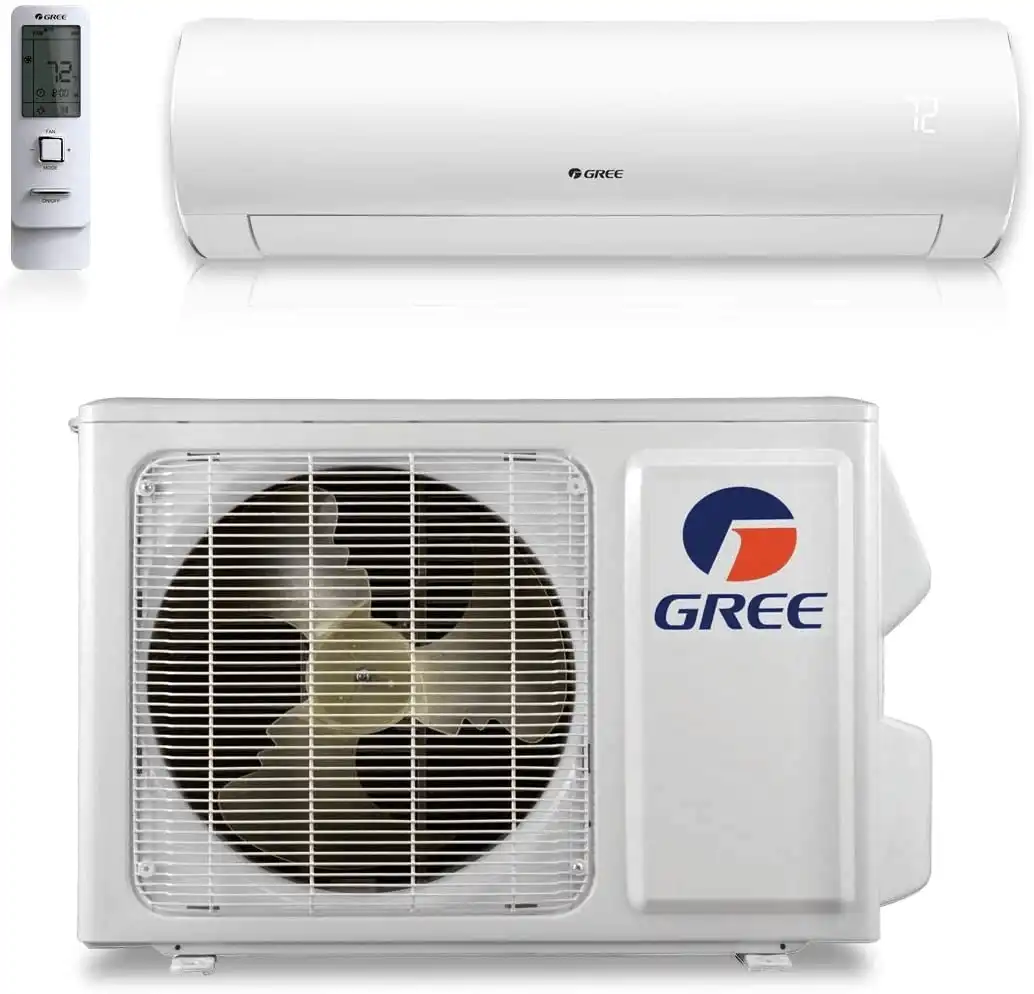


How to Pull a Vacuum on a Mini-Split: New Installs vs Service and Repair
| How to pull a proper vacuum on a mini-split for new installs vs service and repair, including when to run a triple evacuation. |
TL;DR
To pull a proper vacuum on a mini-split, remove the valve cores for full flow, evacuate with a vacuum pump while watching a micron gauge, and pull the system below 500 microns on a new install or to 250 microns on an existing system you have opened. Isolate the pump at the machine and confirm it holds. If the vacuum stalls above target, add nitrogen and evacuate again: remove the micron gauge first because oil contaminates it, add about 5 psig of nitrogen, wait about 5 minutes, then re-evacuate. After a leak or service repair, run a triple evacuation: nitrogen break, pull to 4000 microns, break, pull to 1500 microns, break, pull to 250 microns, then hold one hour without rising above 1000 microns. Cold weather can trap refrigerant in the compressor and accumulator.
How Do You Pull a Vacuum on a Mini-Split?
To pull a vacuum on a mini-split, remove the valve cores with a valve core removal tool for full flow, connect a vacuum pump and a micron gauge, and pull the system down below 500 microns. Then isolate the pump right at the machine and watch the micron gauge to confirm the system holds 500 microns or less and make sure it holds on a new install, and for 250 or less when opening an existing system, such as when repairing a leak or replacing a component. Removing the valve cores speeds the evacuation up, but not necessarily required.
Why Remove the Valve Cores Before Evacuating?
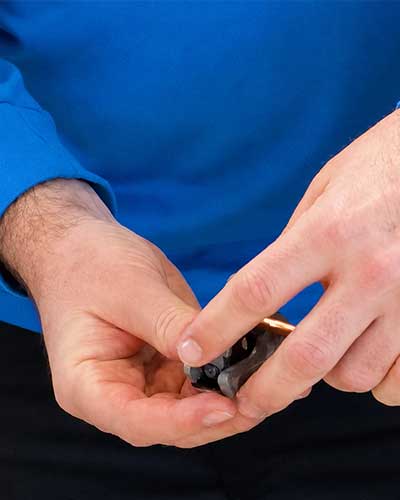
Again, removing the valve core is not required. But removing the valve cores gives full flow to the vacuum, which improves flow and speeds up the evacuation time. If you are doing an evacuation for service, use the valve core removal tool and pull the valve core out of the valve body, and pull the second valve core if there is one, so you get full flow. A single-zone-style port also gives you a place to hook up your vacuum (micron) gauge.
What Micron Level Should a Mini-Split Vacuum Reach?
Below 500 microns on a new install, and 250 or less on an existing system. Open to the vacuum pump and pull the vacuum while watching the micron gauge until you are below the necessary level of microns based on a new or existing system. That reading is the target for a clean, dry system before you put the charge back in.
How Long Does It Take to Pull a Vacuum on a Mini-Split?
Go by the micron gauge, not the clock. The vacuum is done when the system reads below the necessary micron level (500 or 250), and holds there after you isolate the pump, however long that takes. The longer the line set and the more line sets on the system, the longer it will take. On a clean, dry single-zone line set that often takes 15 to 30 minutes, but moisture in the lines, longer line sets, a small pump, or cold weather can stretch it well past that.
If the pump keeps running and the gauge stalls above target, more run time will not fix it. That stall is the signal to add nitrogen and evacuate again, as described below.
How Do You Confirm the Vacuum Is Holding?
Once you are below the required micron level, shut off (isolate) the vacuum pump right at the machine, then monitor the micron gauge to make sure the machine holds the required micron level or less. If it will not get there, pull the vacuum until it stalls, meaning the pump is running but you are no longer gaining any movement on the gauge and you are nowhere near where you need to be. That stall point is the signal to add nitrogen and evacuate again.
What Is a Triple Evacuation and When Do You Do It?
A triple evacuation is three pull-downs separated by dry nitrogen breaks. Run one after a leak or a service repair, any time the system has been opened. When you have pulled down the condenser coil and the compressor, do at least a triple evacuation to make sure you have a good, dehydrated system before you weigh the charge back in.
Before you start:
- Use a micron gauge.
- Connect to more than one port when applicable.
- Use a core removal tool. Not required, but it gives you full flow.
- Make sure the vacuum pump has clean oil.
Step 1: Pull down until the micron gauge stalls
Start the evacuation and run the pump until the gauge stops moving, meaning the pump is running but you are no longer gaining. That stall point is where the first pull ends.
Step 2: Break with dry nitrogen, then pull to 4000 microns
Take the micron gauge off first. Oil is a contaminant to the micron gauge, so remove the micron gauge before you introduce nitrogen. Even if the gauge is rated for pressure, such as 500 psi, oil will contaminate it and it will read incorrectly. Grab the nitrogen tank and use the blue hose direct to the nitrogen tank; you do not even need the manifold hooked up. Break the vacuum with dry nitrogen to 5 psig and leave it for 5 minutes. Disconnect the hose, let the nitrogen dissipate back off, put the micron gauge back on, and pull down to 4000 microns or less.
Step 3: Break again, then pull to 1500 microns
Break with dry nitrogen to 5 psig for 5 minutes, pulling the micron gauge off again before the nitrogen goes in. Let it dissipate and pull down to 1500 microns or less.
Step 4: Break a third time, then pull to 250 microns
Break with dry nitrogen to 5 psig for 5 minutes. Let it dissipate and pull down to 250 microns.
Step 5: Isolate and hold for one hour
Isolate the vacuum pump at the machine and hold the system for one hour. It passes if the micron gauge does not rise above 1000 microns. If it rises past 1000, run the evacuation again. Sometimes that means a quadruple evacuation.
How Does Cold Weather Affect Pulling a Vacuum?
A lot of it depends on the temperature outside. If it is really cold, refrigerant can actually get trapped up in the compressor and the accumulator, which keeps you from reaching 250 microns.
Gently warm the compressor
Get the front panel off and open the jacket up a little on the compressor, then use a heat gun to gently warm the compressor while you have the nitrogen in there. That helps boil the trapped refrigerant out so it is not affecting your ability to achieve the 500 micron level. Sometimes making things worse first lets you make them better faster.
How Do You Pull a Vacuum on a Multi-Zone System?
Isolate further away from the machine. Use an adapter to hook your micron gauge onto one of the other ports so you are reading the actual vacuum on the machine side, and use a shut-off tool to isolate the vacuum pump from the machine. Achieve 500 microns with the vacuum pump running, then shut off, isolate, and confirm it holds.
You do not need to move the gauge between circuits
On a four or five zone machine, the piping coming out all goes to one common suction manifold, so the gauge reads that common manifold no matter which circuit is running. You do not need to move your gauge from circuit to circuit.
On an install, evacuate one circuit at a time
Keep the service valves closed and pull each circuit down individually. Reach 500 microns on that circuit, isolate, and confirm it holds so you know that circuit has no leaks. Then open that circuit, move to the next, and pull it back in. Do not try to pull it all down at once, because if the micron gauge rises you will not know which circuit is causing the leak. The service valves within the machine are what let you isolate.
If the entire system is empty, you can pull from any port
If the entire system is empty, you do not have to isolate one circuit at a time. The ports all share the common manifold, so you can pull from any port, or from more than one port at the same time.
When Should You Evacuate and Weigh in a Fresh Charge?
Any time you suspect the unit is low on charge, any time you have had a leak and fixed a leak, and any time you are not 100 percent sure the charge is what the factory charge should be. You might be the third or fourth tech on the machine and not know what a previous company or tech did to it.
Recover and weigh the refrigerant
Use a recovery tank. It only has to be an empty, clean tank if you plan on reusing that refrigerant. If you do not plan on reusing it, weigh your tank before recovery and weigh it after recovery, so you know exactly how much refrigerant you pulled out. That tells you whether the charge was the issue and gives you a starting point to weigh in the correct charge.
Confirm a leak with trace refrigerant
If you pull the charge out and you are, say, three pounds down, it is leaking somewhere. Put about a half a pound to a pound of refrigerant back in the machine, then use the nitrogen tank to run the pressure up to about 450 to 500 psi. That gives you a trace of refrigerant, and enough pressure on it, so an electronic leak detector can pick up the leak.
Quick Reference: Target Vacuum and Evacuation Values
| Step | Target |
|---|---|
| Final vacuum level | Below 500 microns on new system or 250 microns on existing system |
| Holding (decay) test after isolating the pump, new install | 500 microns or less |
| Holding (decay) test after a leak or service repair | Hold 1 hour, does not rise above 1000 microns |
| Triple evacuation staged pull-down targets | 4000 microns, then 1500 microns, then 250 microns |
| Nitrogen pressure between evacuations | About 5 psig |
| Nitrogen dwell time | About 5 minutes |
| Evacuations for the condenser coil and compressor | At least a triple evacuation |
| Trace-gas leak check pressure | About 450 to 500 psi (nitrogen) |
| Trace refrigerant amount for leak check | About a half to one pound depending on capacity of unit and line set length |
For Additional Insights on Pulling a Vacuum
Watch the full instructional video on best practices when pulling a vacuum:
Frequently Asked Questions
What micron level should you pull a vacuum to on a mini-split?
Below 500 microns on a new install, and 250 or less on an existing system, such as when repairing a leak or replacing a component. That reading is the target for a clean, dry system before you put the charge back in.
Do you have to remove the valve cores to pull a vacuum?
No. Removing the valve core is not required, but it gives full flow to the vacuum and speeds up the evacuation time. If you are doing an evacuation for service, use the valve core removal tool and pull the valve core out of the valve body, and pull the second valve core if there is one.
How long does it take to pull a vacuum on a mini-split?
Go by the micron gauge, not the clock. On a clean, dry single-zone line set that often takes 15 to 30 minutes, but moisture in the lines, longer line sets, a small pump, or cold weather can stretch it well past that. The vacuum is done when the system reads below the necessary micron level and holds there after you isolate the pump.
What is a triple evacuation on a mini-split?
A triple evacuation is three pull-downs separated by dry nitrogen breaks. Run one after a leak or a service repair, any time the system has been opened. Pull down until the gauge stops moving, then break with dry nitrogen and pull down to 4000 microns or less, break again and pull down to 1500 microns or less, then break a third time and pull down to 250 microns.
Why do you remove the micron gauge before adding nitrogen?
Oil is a contaminant to the micron gauge. Even if the gauge is rated for pressure, such as 500 psi, oil will contaminate it and it will read incorrectly. Remove the micron gauge before you introduce nitrogen, then put the micron gauge back on before you pull the system down again.
How much nitrogen do you use between evacuations?
Break the vacuum with dry nitrogen to 5 psig and leave it for 5 minutes. Use the blue hose direct to the nitrogen tank; you do not even need the manifold hooked up. Do the same before the pull-down to 1500 microns and again before the pull-down to 250 microns.
How do you know the vacuum is holding after a leak or service repair?
Isolate the vacuum pump at the machine and hold the system for one hour. It passes if the micron gauge does not rise above 1000 microns. If it rises past 1000, run the evacuation again.
Why will a mini-split not reach its micron target in cold weather?
If it is really cold, refrigerant can actually get trapped up in the compressor and the accumulator. Get the front panel off and open the jacket up a little on the compressor, then use a heat gun to gently warm the compressor while you have the nitrogen in there. That helps boil the trapped refrigerant out.
Do you need to move the micron gauge between circuits on a multi-zone system?
No. On a four or five zone machine, the piping coming out all goes to one common suction manifold, so the gauge reads that common manifold no matter which circuit is running. You do not need to move your gauge from circuit to circuit.
Can you pull a vacuum from more than one port on a multi-zone system?
If the entire system is empty, yes. The ports all share the common manifold, so you can pull from any port, or from more than one port at the same time. On an install, keep the service valves closed and pull each circuit down individually, then reach 500 microns on that circuit, isolate, and confirm it holds so you know that circuit has no leaks.